Friday 1st Feb - Planning, Taking photos for storyboard.
Tuesday 5th Feb - Pitch Presentation
Friday 8th Feb - Filming
Tuesday 12th Feb - Filming
Friday 15th Feb - FILM ALL DAY - INCENT DAY
Tuesday 26 Feb - Editing
Friday 1st March - Editing
Tuesday 5th March - Editing
Friday 8th March - Deadline
Tuesday, 29 January 2013

Friday, 25 January 2013
Prelim Evaluation: What we would have done different next time.
What would you do differently next time?
This effort has to be a success in terms of the work put in by our group members however perhaps next time we might focus more on the Mise en scene and also maybe put emphasis on the sound as they would both help create meaning which is important amongst a thriller opening.
Prelim Evaluation - What wasn't successful.
What wasn't successful?
I feel we still had a few minor mistakes in our video which came down to how focused we were and you have to consider our lessons whilst filming were in the afternoon when we are at our tiredest point of the day. Also i feel we were not successful when it came down to the filming as i stated before minor mistakes like looking into the camera directly made it originally unprofessional however after editing our video we removed these mistakes and in term of mistakes we had none.
Errors that occurred during filming included the fact that we failed to maintain the 180 degree rule as we broke it in one of the scenes. Other failures included factors such as our dialogue wasn't too loud and clear for the camera to pick up and we didn't stick entirely to our initial storyboard. Also during the editing process of our prelim we failed to create our own soundtrack and add it to sequence, we instead settled for a youtube soundtrack. This may not have been a great choice as examiners prefer for students to create their own music rather than use material from others.
However despite this, we learnt various lessons from it and now know what needs to be done, changed and improved when we create our final sequence for examination.
Prelim Evaluation: What we have learnt from making the Prelim.
What have you learnt from the making of the prelim?
As a group as we said before we think our camera understanding has improved very much even though mazlum was our key camera-an. Watching him record certain shots such as the difficult over-shoulder shot has put confidence in our groups recording ability. This prelim has highlighted the importance of mise en scene as we realise how much it helps in creating meaning. Also our editing proved to be crucial in the end as it not only took out some recording mistakes but also it created and gave the sequence some sort of meaning and tension.
However, once we have filmed the prelim and started editing I have realised that we have broken the 180 degrees rule, it is good that we have noticed as we will not break it again during our filming for our real thriller, I have also learnt that it is not as easy to film in very small places to get the perfect shots therefore we will have to work in a very spacious locations where we could work comfortably.
However, once we have filmed the prelim and started editing I have realised that we have broken the 180 degrees rule, it is good that we have noticed as we will not break it again during our filming for our real thriller, I have also learnt that it is not as easy to film in very small places to get the perfect shots therefore we will have to work in a very spacious locations where we could work comfortably.
Prelim Evaluation: What was successful
What was successful?
Overall as a group we feel that the prelim had helped us better and enhance our practical knowledge and skills on filming and in particular our understanding of the effects of different types of shots, We had most definitely improved our professionalism when it came down to the mise en scene and certainly our personal performances in the videos were much more better. Furthermore in terms of success i think that by assigning one person to each role such as camera man and also Editor we had achieved more in a shorter amount of time compare to our previous project ' scarface ', this was because of the fact that we individually could focus more on what our job was in the group. So in terms of Camera shots i feel that although you could outline some mistakes overall the camera shots were much improved, this may have happened because of our revision of the many types of shots before even planning our prelim, Mazlum had understood all the shots we were in need of which brings me on to the Editing which we all assisted Djamel in, Djamel and us highlighted the mistakes we had made and through editing he had fixed these mistakes to make them look just about alright.
Photos of us working on our Prelim.
Pictures
During the process of our work, once we have finished filming our prelim we started editing...


Student film opening analysis
Student film opening analysis
We can analyse film openings in terms of the four micro elements; camera, editing, mise en scene and sound. "Succubus" a Thriller opening created and shot by a group of students, that uses intertexuatily to create the conventions of a Thriller film. It borrows aspects from the well known 1960 American release "Psycho" by using elements from the famous shower scene.
What happens?
We are shown a young man taking a shower within a changing room. A few moments after, we are shown a young woman walking slowly through a corrider. We are again shown a shot of the man continuing to take a shower, and again, we are shown the woman slowly walking through another corrider. She arrives at a door, proceeds, and enters the place where the man is having a shower. She removes her cardigan, removes her hair band, and then reveals a knife, which reveals that an act of violence is due to occur. The man is unaware of the woman as his view is obscured from the entrance to the changing room. The woman opens the shower cubicle and immediately stabs the man by surprise, several times, resulting in the murder of this man.
Camera
During the beginning of the opening, we are shown a close up shot of the shower knob, which is turned by the hand of the man, indicating that a shower scene is going to be established. We are then shown a wide shot, which reveals the man to be inside the shower cubicle of what seems to be a changing room. This establishes the setting of the scene. We are then shown a behind wide shot of a corrider, where a woman is shown walking into the frame, and then walking down the corridor. This may suggest that she is travelling to a certain place in the building the scene is set in, possibly for a particular motive. We are then shown a close up shot of the shower head within the shower cubicle, and then the shot returns to the wide shot of the changing room, and the cubicle is shown to have steamed up, partially obscuring the mans view of the outside, in addition to his obscurity of view of the changing room entrance, and this builds emphasis on the fact that his view is blocked from the outside, which will allow the tension in the build up to increase as is revealed a few moments later to the audience. The close-ups throughout the scene increase the tension and draw the audience into the two characters.
Editing
At the start of the clip, we are shown an opening title, being the production company's name "Lionsgate Films". The cuts have a particularly longer difference in time between them, which creates a slow-paced scene, and lengthens out the time it takes for each event to occur, from beginning to end. This has the possiblility of creating more tension within the audience, on top of the already created tension from the close ups throughtout the scene.
Sound
The natural ambient sound of the corridor has been enhanced, to possibly capture the audiences attention by allowing them to not only see the corridor, but also hear the ambience clearly, creating realism and the feeling of 'being there'. As the woman walks down the corridor, there is a slight undertone of sound, which may intend to suggest to the audience that there is a build up. Furthermore, music has been edited in during when the knife has been revealed to be in the possession of the woman, building into a crescendo alongside the building tension on screen. When the knife is lifted and about to be lunged into the man in the shower, a hightened sound has been inserted in order to link the sound to the action.
Wednesday, 23 January 2013
Foley sound
Foley Sound
After researching Foley sound, I decided to attempt to record my own Foley sounds using the sound recorder on my smartphone.
Below are images demonstrating how I created my own Foley sounds:
 |
| The sound record function I had used to record my Foley sounds. |
 |
| A list of some of the Foley sounds that I had recorded on my smartphone |
Above are various Foley sounds that I have created to possibly support future project; click the play button on each player to listen to each Foley sound.
Tuesday, 22 January 2013
Research homework - Task 3
When a stranger calls
The thriller i decided to watch is 'When a stranger calls'.
This is the trailer of the actual movie:
Once i have watched this film, there were many different conventions uses that we have previously learnt in our lessons. Firstly at the beginning of the film, the opening sequence was there to represent the Distributers, Producers, Film Title, actors and many more. We then are introduced to the main characters which in this case was the girl and the parents of the children, throughout the whole film there is a constant amount of tention that builds up, the soundtrack collaborates extremely as it helps to keep the tension increasing to its climax. These are the few things that help led this movie to have successfully do what it has aimed to do, to thrill you and get your heart pumping, many more things such as editing and camera has also contributed as it the camera keeps the stranger discrete and anonymous which helps interact the audience and to keep wondering who this person calling really is.
The thriller i decided to watch is 'When a stranger calls'.
This is the trailer of the actual movie:
Once i have watched this film, there were many different conventions uses that we have previously learnt in our lessons. Firstly at the beginning of the film, the opening sequence was there to represent the Distributers, Producers, Film Title, actors and many more. We then are introduced to the main characters which in this case was the girl and the parents of the children, throughout the whole film there is a constant amount of tention that builds up, the soundtrack collaborates extremely as it helps to keep the tension increasing to its climax. These are the few things that help led this movie to have successfully do what it has aimed to do, to thrill you and get your heart pumping, many more things such as editing and camera has also contributed as it the camera keeps the stranger discrete and anonymous which helps interact the audience and to keep wondering who this person calling really is.
Research homework - Task 2
Analysing two different opening sequences
For this part of my homework, i will be analysing the opening sequences of both 'Seven' and 'Arlington Road'.
Seven: This is the opening of the film 'Seven'
For this part of my homework, i will be analysing the opening sequences of both 'Seven' and 'Arlington Road'.
Seven: This is the opening of the film 'Seven'
Immediately we are introduced to a very weird non-diagetic sound of something such as a thunder, the sound is straight away jumped to a high tempo which would portray to the audience that this movie would have very climaxed scenes and there would be very few quiet scenes. We then are introduced to the opening sequences on just a plain black background which is unstable and very 'shakey', there is also a variety of mise-en-scenes introduced such as the book, the medal screw, razor and many more mysterious items, which mostly all relate to crimes, these objects gives us a sense of what the movie would be about and attracts the viewers by making them think of what it could mean, furthermore, someone is introduced however we cannot see their face but only their hands and what they're doing which also just creates more questions.
Arlington Road: This is the opening of the film 'Arlington Road'
At the first glimpse of the opening sequence we are introduced straight away to two of the characters, first of whom is the person who found the boy whilst driving the car and the second is the female doctor, we then hear the man aggressively shout at the female that he doesn't know who this kid was, this aggressive tone would help straight away to gain the audiences attention as they would be confused about the situation. The title sequence is very different than other film openings, we first start off with a short glimpse of the actual film and then move onto the sequences which are also in a superstitious background to represent confusion of the audience and what they are thinking. The sound track of a very creepy person making witch like noises creates the audience to get a little panic or buzz out of it to keep them interested.
Research homework - Task 1
Fight Club
The title sequences i will be looking at for is the movie Fight Club.
This is the link to the opening sequence of Fight Club - http://www.artofthetitle.com/title/fight-club/
At first we are introduced to the Producer and Distributer icon as almost nearly every film, we are then introduced to a very up-beat non-diagetic sound track which has a very aggressive feel to it, as it correlates with the film title 'FIGHT CLUB'. We are then introduced to a variety of openings whilst there is a special effected background of a DNA like picture.
The audio immediately grabs the audiences attention, the fast tempo beat helps to get the audience pumped up and excited about the movie, the audio is almost like a warm up session to the movie as it does involve violence which some viewers may find disturbing therefore this audio is an approach to the audience in order to slowly get them used to the whole film. The special effect of the DNA and the camera moving around also relates to the music as it is portraying how you should feel, very excited and hyper, the pace of the camera also is very fast which links up with the tempo of the sound track helping the audience to feel very connected towards the movie before it has started.
Towards the end of the clip, we end up with a gun being pointed at one of the main actors in the film, this helps create dramatic tension immediately, which also catches the audience once again very quickly, the film is using these elements to always keep up interested in the movie with high climaxes.
The title sequences i will be looking at for is the movie Fight Club.
This is the link to the opening sequence of Fight Club - http://www.artofthetitle.com/title/fight-club/
At first we are introduced to the Producer and Distributer icon as almost nearly every film, we are then introduced to a very up-beat non-diagetic sound track which has a very aggressive feel to it, as it correlates with the film title 'FIGHT CLUB'. We are then introduced to a variety of openings whilst there is a special effected background of a DNA like picture.
The audio immediately grabs the audiences attention, the fast tempo beat helps to get the audience pumped up and excited about the movie, the audio is almost like a warm up session to the movie as it does involve violence which some viewers may find disturbing therefore this audio is an approach to the audience in order to slowly get them used to the whole film. The special effect of the DNA and the camera moving around also relates to the music as it is portraying how you should feel, very excited and hyper, the pace of the camera also is very fast which links up with the tempo of the sound track helping the audience to feel very connected towards the movie before it has started.
Towards the end of the clip, we end up with a gun being pointed at one of the main actors in the film, this helps create dramatic tension immediately, which also catches the audience once again very quickly, the film is using these elements to always keep up interested in the movie with high climaxes.
Conventional order of thriller title sequences
The conventional order of thriller title sequences is as follows:

Title sequence analysis 2

This is a title sequence analysis which I have completed for the film "Memento" a 2000 American neo-noir psychological thriller. This also includes a title sequence timeline, which will aid myself and our group to create an opening title sequence that adheres to the typical opening title sequences of the Thriller genre.
Title sequence analysis 1
.jpg)
Behind the scenes of Prelim
Behind the scenes of Prelim
Sunday, 20 January 2013
Research Homework Task 3
I watched a thriller movie called 'SAW'.
Here is the trailer of the film:
After watching the film I noticed that there was various conventions used that I have recently learnt about.
For example:
Here is the trailer of the film:
After watching the film I noticed that there was various conventions used that I have recently learnt about.
For example:
- Credits - credits were used in the opening and closing of the film
- Introduction to main characters - Antagonist and protagonists were introduced throughout the film
- Engage the audience - tension and suspense was created in various parts of the film
- Revealing the story line - A film like SAW has different aspects to its main story line and these were revealed throughout the film
All these conventions helped make the film exciting and entertaining and led to a very enjoyable and understanding film.
Research Homework Task 2
I will be analysing and comparing to opening sequences. The two films are 'Arlington Road' and 'The Shining'.
Here is the opening sequence of 'The Shining':
The opening of the shining includes many factors such as visuals and background music followed by credits and the title all presented in a smooth sequence.
This method is very effective as it helps the wording stand out and eye-catching which emphasizes to the audience the title and names presented. This helps further engage the audiences attention and helps them keep focus on the screen rather than ignoring the credits. In a narrative opening the story line unfolds right from the start making sure the audience have to watch every moment.
Here is the opening sequence of 'The Shining':
The opening of the shining includes many factors such as visuals and background music followed by credits and the title all presented in a smooth sequence.
This method is very effective as it helps the wording stand out and eye-catching which emphasizes to the audience the title and names presented. This helps further engage the audiences attention and helps them keep focus on the screen rather than ignoring the credits. In a narrative opening the story line unfolds right from the start making sure the audience have to watch every moment.
The clip also uses smooth sound, bright lighting and has a positive vibe in general, this helps set the pace and mood of the film.
Here is the opening sequence of 'Arlington Road':
You can see that instead of a narrative opening the film 'Arlington Road' uses a discrete title sequence for its opening. A discrete title sequence involves a combination of various clips and images not in connection, it provides clue to the audience about what they are watching however does not reveal the story line in an obvious manner. This is an effective method as it engages the audience and leaves them in suspense.
Also in contrast to the shining, the opening of arlington road uses dim dull lightning and dark dead colours and it is very slow. This sets the pace and mood of the film.
You can see overall that opening sequences differ mainly due to the kind of the film but the sequences almost always have the same objective which is to express to the audience what the film is about and to engage their attention.
Research Homework Task 1
The title sequence I have looked at is 'iRobot' and I will be explaining the various conventions that are used within the sequence.
Here is a link to where you can watch the clip: http://www.artofthetitle.com/title/i-robot/
Going through the clip you will be able to witness the use of many conventions.
For example:
Here is a link to where you can watch the clip: http://www.artofthetitle.com/title/i-robot/
Going through the clip you will be able to witness the use of many conventions.
For example:
- The story line is revealed - the audience get to grips with the understanding that the film is based on humans and robots.
- The main character is introduced - the audience see Will Smith
- Many credits are provided
- Suspense - tensions and suspense is created via what is going on in the clip, the use of robots helps engage the audience and create suspense
All these various conventions and more help a film capture their audiences attention and be successful.
Friday, 18 January 2013


Arlington Road Opening Sequence Edit

Djamel, Masum, Mazlum, Mantaqa
We have re-edited the opening sequence of Arlington Rd by adding our own titles, adhering to the conventions of the particular opening sequence. We have included a screen shot of the editing process within Final Cut Pro.
Title Sequence with Texts

Here you can see the clips being put into the right order and text being added.
Thursday, 17 January 2013
Foley Sound
Foley Sound
As most films tend to include sound, we must understand that sound is an extremely key element to be ever used, sound has many effects, it helps build tention, settle the tone or even to imply a certain thing is a different way, sound has many more important ways to portray different meanings and so on.
Foley sound is the reproduction of everyday sounds from things such as doorsteps, door opening or creeks on the floor. Foley sound does contribute into making many different sounds to create different effects, for example a creek on the floor could help change the tone is somebodies voice as we'd assume that that person in particular is creeped out and slightly is frightened. Once i have watched the video of Foley Sound of the film openings site provided by our college, i learnt many things for example, the foley sounds are usually created individually and then added on during the editing of the film.
After watching the foley sounds clip i have understood the importance of these sounds and how they are used in order to portray a certain effect of the audience, i also realised that sound is not just put into the editing, it is taken into deep consideration and takes a while until it finally is used in the film.
As most films tend to include sound, we must understand that sound is an extremely key element to be ever used, sound has many effects, it helps build tention, settle the tone or even to imply a certain thing is a different way, sound has many more important ways to portray different meanings and so on.
Foley sound is the reproduction of everyday sounds from things such as doorsteps, door opening or creeks on the floor. Foley sound does contribute into making many different sounds to create different effects, for example a creek on the floor could help change the tone is somebodies voice as we'd assume that that person in particular is creeped out and slightly is frightened. Once i have watched the video of Foley Sound of the film openings site provided by our college, i learnt many things for example, the foley sounds are usually created individually and then added on during the editing of the film.
After watching the foley sounds clip i have understood the importance of these sounds and how they are used in order to portray a certain effect of the audience, i also realised that sound is not just put into the editing, it is taken into deep consideration and takes a while until it finally is used in the film.
Wednesday, 16 January 2013
Foley Sound
Foley Sound
Sound is a key element in all of media especially film as not only is it one of four micro elements, but it also contributes in giving the audience an understanding, for example, sound backs up dialogue, can help set the pace, tone and mood etc.
After watching the foley sounds clip on the film openings website I learnt many things about foley sounds. For example, initially I thought all digetic sound was created within action. I thought that background music was the only sound that was edited into the action. But after watching the clip I realised apart from dialogue, the majority of sound is created individually and then edited into the action post production in order to support dialogue and action.
The clip has made me realise how important sound and editing is, the link between the two micro elements and I have also realised how much sound is altered before being part of the final production.
Group analysis of 2 title sequences
The following is the analysis of the opening sequence of the film 'Momento' where me and my group looked at various aspects of the opening sequence of the film.

After analysing this first opening sequence, we then looked at the opening sequence of the film 'Marathon Man'. We did this so we could answer the fourth bullet point in question 4 and in order to see the similarities and differences between film openings, to help us we did a timeline of the opening sequence of Marathon Man in order to help us compare and contrast the similarities and differences between the two openings.

After researching and analysing different film openings I have learnt a great deal. For example I learnt that film openings are about more than just giving an indication of the story line its about giving credit to everyone involved in the film, setting the pace and mood of the film and much much more.

After analysing this first opening sequence, we then looked at the opening sequence of the film 'Marathon Man'. We did this so we could answer the fourth bullet point in question 4 and in order to see the similarities and differences between film openings, to help us we did a timeline of the opening sequence of Marathon Man in order to help us compare and contrast the similarities and differences between the two openings.

After researching and analysing different film openings I have learnt a great deal. For example I learnt that film openings are about more than just giving an indication of the story line its about giving credit to everyone involved in the film, setting the pace and mood of the film and much much more.
Class analysis of a title sequence
The following is a class analysis of the opening title sequence to the film, 'The Room Mate'. This is my personal completed sheet of the analysis where I looked at the order that opening sequence elements come in, the pace of the sequence and the font style and size used within it. This gave me a brief understanding of the aims of a opening sequence.

Saturday, 12 January 2013
Foley Sound Effects
Foley Sound Effects
Sound is a very crucial aspect of film as not only is it one of the micro elements but it also has a special significance that creates meaning and backs up the dialogue.After watching the short clip about Foley sounds on the Teaching blog i have learn't quite a bit about it and what i understood was that most of the time action sounds from movies are cut out and replaced by 'Foley sounds' which is generally and most of the time added to the film during post production.
Foley sounds can be used for many things such as footsteps, the rustle of clothes, placing a glass on a table, a person sitting down or standing up as well as mainly all other muted movement by the actors.
For example, footsteps is recreated by a special Foley sound actor who acts as if they are the recorded actor except they just make the active sounds.
Also there are special techniques used by some to enhance the sound especially in the rustle of clothes which is specifically designed to enhance the meaning of the dialogue and keep the audience anticipated and eager.
Ultimately Foley is the rt of putting sound in sync to picture in real time which includes all feet all hands and all cloths.
Title sequence conventional order activity
Another activity we had we had to partake was guessing the conventional order of the Title sequences, This was done at the beginning of the lesson and also at the end to see and highlight our understanding of the 'norm' and 'conventional order'.
-Our idea of the conventional Order of a title sequence before Lesson:
- Production icon
- Distributor icon
- Production in title sequence
- Distributor in title sequence
- director executive producer
- written by
- Film title
- Actor 1
- Actor 2
- Actor 3
- Actor 4
- Actor 5 etc..
- Production designer
- Edited by
- Music by
- Music supervisor
- Director of photography
- Costume
- Cast
-Our idea of the conventional Order of a title sequence before Lesson:
- Production icon
- Distributor icon
- Production in title sequence
- Distributor in title sequence
- director executive producer
- Actor 1
- Actor 2
- Film title
- Actor 3
- Actor 4
- Actor 5 etc..
- Casting
- Costume
- Music supervisor
- Music by
- Edited by
- Production designer
- Director of photography
- Executive Producers
- Written by
- Directed by
 |
| some work we done on the conventions |
 |
| Our prediction before the lesson |
 |
| Our prediction after the lesson |
 |
| The actual conventional order |
Class timeline activity
During class we had to further analyse the Title sequences through Time lines, where we enter the start and end times of the film openings, and then plot the title sequence along the line.
 |
| Timeline above and also below |

Title sequence Analysis
In small groups we had to analyse a few title sequences and then present our findings back to the rest of the class.
- State the production & distribution companies. How are they introduced? What purpose do they serve at the start of the movie?
New market in association with Summit Entertainment, Producer, Distributor, Team Todd productions, Introduced with Producer/Distributor icon. The text fades in and out as a blue capital font which is placed in the middle of the screen, it re installs the names of companies.- Film Title - Where exactly is this placed? start, middle, end?
- Placed during the middle of the sequence or more popularly during the end of the begining at approximately just over the minute mark of the sequence.
- It is the 10th credit out of the 27.
- The title actually has a much larger font size making it more eye catching also the fact that it stays on longer than any other credit also says a lot.
- The first visual of any actor or object comes during the Title which previously was only a black screen
- Once you have watched a number of title sequences try to make conclusions about the following:
Where does the film title nearly always appear?
What types of fonts tend to be used in title sequences?
Is your Time line conventional? if not, How does it differ from the 'norm'?
How many time does the Institutional information such as production company and distributors appear?
-This is the worksheet we had completed while we watched many clips of title sequences.
Friday, 11 January 2013
Adding text on clips from Final Cut Pro.
After we have completed the Title Sequence tasks, we then got the chance to learn how to use and put the titles in during the clip, before we could do this we needed to put a short clip together from separated parts of the clip.
We worked in pairs, myself and Mantaqaa worked together to complete the clip, then we added on the texts by doing the following: once clips is complete, click on 'Effects' tab on left had side of Final Cut Pro then we had to click on 'Video Generator' which lead us to a screen which after we clicked 'Text Folder' we clicked 'Type text' then a sample popped up onto our screen allowing us to write what we'd both like to, there were 4 tabs, we clicked on control, typed the text, changed the font,size and colour and finally we added it onto our clip by dragging it onto the storyboard where the clips were put together.
We worked in pairs, myself and Mantaqaa worked together to complete the clip, then we added on the texts by doing the following: once clips is complete, click on 'Effects' tab on left had side of Final Cut Pro then we had to click on 'Video Generator' which lead us to a screen which after we clicked 'Text Folder' we clicked 'Type text' then a sample popped up onto our screen allowing us to write what we'd both like to, there were 4 tabs, we clicked on control, typed the text, changed the font,size and colour and finally we added it onto our clip by dragging it onto the storyboard where the clips were put together.
Title sequence analysis of two clips.
Sheet of task of analysis -

Second sheet of second timeline -
.JPG) We had to have two timelines in order to complete the 4th question, therefore we then watched another clip and created a new timeline of the title sequence, the clip we watched was 'Marathon Man'
We had to have two timelines in order to complete the 4th question, therefore we then watched another clip and created a new timeline of the title sequence, the clip we watched was 'Marathon Man'
Second sheet of second timeline -
.JPG)
Timeline Sequence - card activity.
Timeline Sequence - Card activity.
Group prediction no. 1 - This is our first prediction as a group.
.JPG)

.JPG)
Group prediction no. 1 - This is our first prediction as a group.
.JPG)
Group prediction 2 - This is the second prediction after we have completed some work on sequences.
Correct sequence -
.JPG)
Analysis of a Title Sequence.
Analysis of a Title Sequence.
.JPG)
.JPG)
This is my completed sheet of my analysis on 'The Room mate' opening sequence.
The structure of thriller openings
The structure of thriller openings
There are various types of thriller openings and in this post I will be explaining 3.
A narrative opening with the title running throughout: The Shining
The opening of the shining includes many factors such as visuals and background music followed by credits and the title all presented in a smooth sequence.
This method is very effective as it helps the wording stand out and eye-catching which emphasizes to the audience the title and names presented. This helps further engage the audiences attention and helps them keep focus on the screen rather than ignoring the credits. In a narrative opening the story line unfolds right from the start making sure the audience have to watch every moment.
This method is very effective as it helps the wording stand out and eye-catching which emphasizes to the audience the title and names presented. This helps further engage the audiences attention and helps them keep focus on the screen rather than ignoring the credits. In a narrative opening the story line unfolds right from the start making sure the audience have to watch every moment.
A discrete title sequence: Arlington Road
The film 'Arlington Road' uses a discrete title sequence for its opening. A discrete title sequence involves a combination of various clips and images not in connection, it provides clue to the audience about what they are watching however does not reveal the story line in an obvious manner. This is an effective method as it engages the audience and leaves them in suspense.
Titles over a blank screen, followed by a narrative opening: Donnie Darko
This film uses white titles over a blank screen, followed by a narrative opening. By having titles over a blank screen it means that the titles are the sole attraction therefore the audience focus on the titles and who is credited in them. This is effective as it makes the audience focus on the credits, however because it is dull they may choose to dismiss the opening. This is a very traditional method of a title sequence and is rarely used now in modern day media.
Intertextuality
Intertextuality
Intertexuality refers to the visual references between two films where one film has ‘borrowed’ aspects from the other which audience members may be able to recognise.
Psycho is a very famous thriller and the opening sequence creates a lot of meaning and sets a pace of the film by introducing the sequence by a wide shot of the city to present its location, this gives us an idea of were it is set and hints at us some of the context perhaps. It is more commonly known for its famous and thrilling scene in where the woman is brutally murdered in the bath and this scene has been recreated many times.
What lies beneath:
In 2001 'what lies beneath' was released and it had borrowed few aspects from 'psycho', in a scene, we see a man take the woman to the bathroom and this location for a murder was not just a coincidence it was purposely used, the audience will notice the similar pattern through the use of certain props for example the shower head being turned on as the woman lays dead was a particular similarity.Fatal attraction:
The film 'fatal attraction was released in 1987 and it also has many borrowed aspects of the film, one scene consists of an outbreak in the bathroom were two men are picture fighting and being violent, the fact that it is located in the bathroom has now become a thriller convention as its famous debut in psycho proved to be popular amongst the audience who will associate the scene with that film.The stepfather:
Another Similar film or recreation of psycho was 'the stepfather', were a father is seen chasing a woman up the stairs into the bathroom with a knife in his hands however although murder is the case the father turns out to be stabbed by a broken mirror piece by the woman. This is a abstract and popular decision as it most definitely created tension and suspense.Succubus:
'Succabus' was an extremely low budget student film which managed to successfully recreate the psycho plot by again reversing roles by making the woman the aggressive actor and the male the victim, this is an interesting twist as it creates a thrill.Thursday, 10 January 2013
Genre and sub-genre research
Film genres and sub-genres
A film genre is a category in which a particular film falls under. There are money genres of film, such as Action, Thriller and Romance, that are determined by similar narrative qualities that the particular films may share. For example, in a typical action film, an audience will expect to see the likes of explosions, emphasised violence and other content of similar nature.
A sub-genre is a sub-category for a film that is already classified under a particular film genre. Sub-genres are determined by further narrative qualities that exist within a particular film. For example, the Thriller film genre contains several sub-genres within it's existing category such as conspiracy thrillers, action thrillers and psychological thrillers.
Examples of Thriller films that come under a sub-genre:
 |
| 'Enemy Of The State' a 1998 American action thriller, starring Will Smith and Gene Hackman |
 |
| 'Unknown' a 2011 British release psychological thriller, starring Liam Neeson |
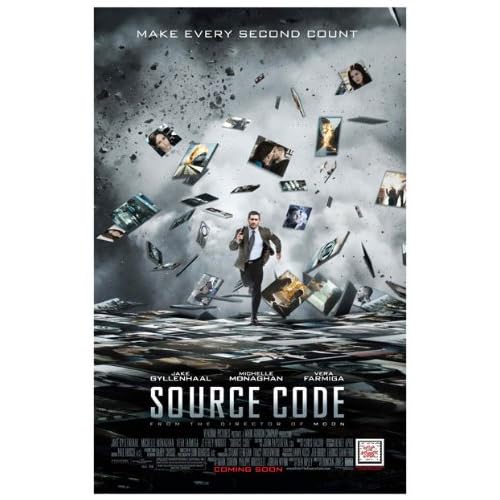 |
| 'Source Code' a 2011 sci-fi techno-thriller, an American release starring Jake Gyllenhaal
Enemy Of The State Trailer
Source Code
Trailer
|
These sub-genres could possibly influence our own film opening. Narrative qualities can be taken from each sub-genre, and manipulated to create an original thriller narrative opening.
Tuesday, 8 January 2013
Health & Safety / Filming tutorial
Health & Safety / Filming
During lesson, we were given a second health and safety tutorial relating to using the filming equipment, and how to film and use equipment correctly, in an orderly manner, and most importantly, safely. Our technician gave us this extra tutorial as it was about a month since we filmed anything, so it was vital that we were confident about the health and safety aspects of operation, handling and technique when filming.
We revisited the tutorials of actions such as correctly attaching a filming camera onto a tripod, safe tripod extension and balancing. We were also given the important tip of ensuring that the camera is set to manual focus, as auto focus can alter the recorded clips focus, and likely produce an unwanted end result.
Furthermore, we revised some shot types, and we were also made aware of some new filming techniques to ensure our filming looks more professional and of a higher quality. We learnt a new technique called the rule of thirds, and the principle of this rule is that the focus subject(s) should take up at least two thirds of the frame, whereas anything other than the focus subjects(s) should take up no more than a third of the frame of the camera. We were shown clips from films where the rule of thirds had been applied. In one of these clips, an over the shoulder shot was employed, where the person who was speaking had taken up approximately two thirds of the frame, whereas the listening person had taken up no more than one third of the frame, which clearly adhered to the rule of thirds principle.
To finish, we were also shown a small but important and effective technique to employ when filming in future, which was ensuring that no space was left above the heads of a subject, as this reduces standards of filming quality, and also reduces the professional look of the end result.
Thriller film openings - examples and convention analysis
Thriller Film Openings and Conventions
The way a film is opened is a crucial part to play in setting the mood and tone of a film in the vast majority of films, such as major release Thriller films. Here, I look at examples of Thriller film openings of major release Thriller films.
A 1999 major release action-thriller starring Will Smith and Gene Hackman. From the opening of the film, we can see that it begins with titles over a blank screen, which is then followed by the narrative opening. Furthermore, after the opening narrative, the opening sequences continue to show more titles, accompanied by stylised editing, which puts the audience in the eyes of surveillance, showing a sort of computer software tracking ground objects such as moving cars along roads and so on.
A 2010 major release thriller starring Russell Crowe and Elizabeth Banks. It is a remake of the French film "Pour Elle" (Anything for Her). Paul Haggis directs the film. I have included a clip of part of the opening sequence, where the characters, including the main characters of the film, are shown to be drinking at a seemingly upper class bar, where a dispute between the two women arises. The woman in the Red Dress asks 'So you've never had a fight with your boss?' and the other responds by stressing that she's tired, wants to go home and see her son. Although this may not reveal much about the instated plot, it may hint certain clues as to what may happen.
The structure of thriller openings
For our coursework, we created a Psychological Thriller opening.
Structure of thriller openings:
When viewing film openings, it is noticeable that there are 3 basic structures which are followed:
- A narrative opening with the titles running throughout
- A discrete title sequence
- Titles over a blank screen, followed by a narrative opening
- And additionally; stylised editing
Some examples of thriller film openings and their structures:
Arlington Road:

Titles running throughout the opening of the film, film production company names, producers, directors, starring actors. Arlington Road also has a discrete title sequence, revealing cuts of street scenes, a road sign with the text 'Arlington Rd' written on it in an American street sign style.
Seven:

Seven has a discrete title sequence, revealing to the viewer a range of different cuts sequenced together to create an opening that effectively sets the opening mood and tone for the film. A discrete opening title sequence does not give away the plot of the film, but instead gives clues to the audience about the film. The items and actions shown hints that this film is of a dark, sinister nature and these sinister shots builds audience anticipation.
Donnie Darko:

Donnie Darko opens with a blank screen with white text, which gives the audience information about distribution and production companies, along side the director and possibly the writer. Once these titles have completed, a narrative opening follows to begin the film.


The Taking of Pelham 123:
The Taking of Pelham 123 features a stylised editing type opening sequence. We see examples of the stylisation through things such as the view of the street where the speed of time is increased substantially, and then it is immediately slowed as the character of Ryder (John Travolta) is viewed, which may create key ideas about this character; one being that he is one of the main characters of the film. There is also a lot of emphasised panning, with many pans that have increased paced to possibly create a fast paced mood as the film has entered it's opening sequences.
During the opening of a Thriller film, we expect to be introduced to the characters, usually the main characters, the introduction of titles, and the location being set. All of these crucial aspects are key to establishing a strong thriller opening.
To the right is a clip of the opening sequence of Arlington Road.
As a group, we aimed to work in the psychological sub-genre of Thriller films. We researched some themes associated with this sub-genre.
The Structure of Thriller openings.
The Structure of Thriller openings
The structure of the first video, The Shining, shown above is introduced to us with a black screen slowly introducing the Producer icon, then after there is a fade out from the distributer icon, which after we are introduced into a landscape view with non-diagetic sound added on to the tracking of the camera of the wide shot view. The camera is then moving along, tracking the car from the a birds eye view as if we are in the body of a bird viewing the whole surroundings. After all of this, the texts in blue start to appear giving us the director name, actors, film title, producer, screenplay and the directed by, after all of the opening credits have finished we then go back to the landscape views.
The second clip was, Panic Room, this clips also started off with a black screen fading into the Distributer icon, which after faded back out into a view of buildings whilst the credits of the producer, pictures, actors, film title, then we are introduced back into the actors, music editors, editors, production, director, produced by and written by and then directed by, however after all of the opening credits have finished we are introduced in a diagetic sound of a female speaking.
Lastly, the opening credit of Donnie Darko is introduced with a narrative over a black frame consisting of nothing which then leads onto the narrative opening. After all of the credits have finished we then get a tracking shot of the male character who is alone on the mountain, after the camera shot, wide shot, is used to show the landscape view of all other mountains and the nature, a non-diagetic sound is introduced which is a little upbeat with a person singing, we then see a variety of different types of shots and settings.
The structure of thriller openings
The structure of thriller openings
-A narritive opening with the titles running throughout...
added effects make the opening sequence create much more meaning to the sequence especially in action packed films like for example Arlington Road.

-A discrete title seqence...

-A discrete title seqence...
These are usually separate from the story and has its own official sequence also it does not reveal the plot not making the plot obvious either.

-Titles over a blank screen, followed by the narritive opening
This builds anticipation as the audience is expecting something highly contrasting after this sequence.
-stylised editing...
the editing is so sophisticated. This will take a very long time in post production if you wish to attempt anything similar so you need to be well planned
Subscribe to:
Comments (Atom)